
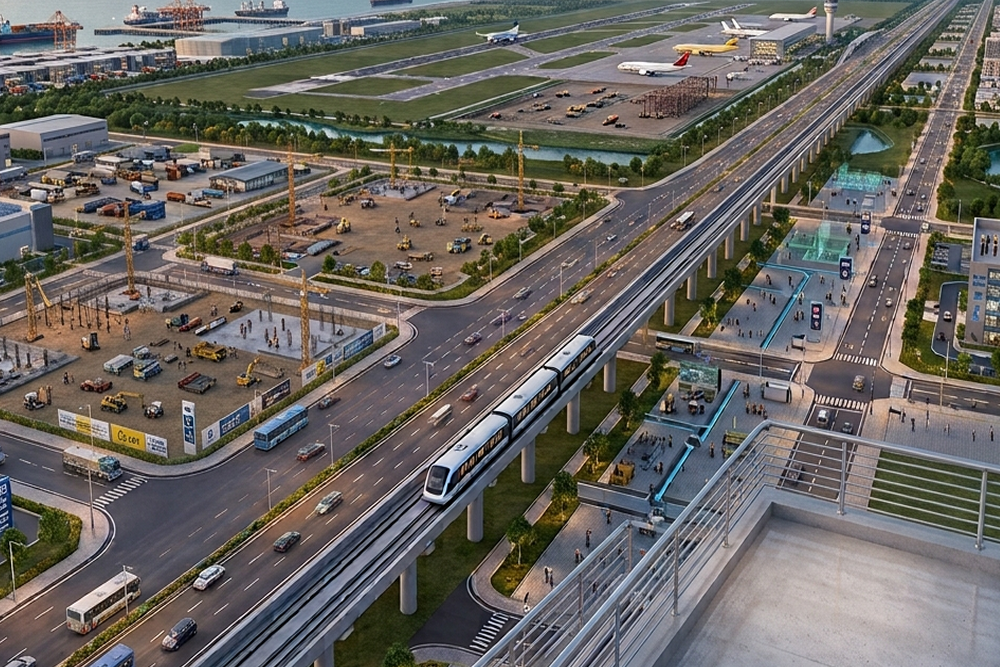
When people talk about the future of modern India, one name pops up almost instantly: Dholera. Located about 100 kilometres southwest of Ahmedabad in Gujarat, Dholera Special Investment Region (SIR) isn’t just another urban extension it’s built from the ground up as India’s first greenfield smart city.
What makes a city succeed while others get stuck in endless gridlock? Infrastructure and connectivity. Dholera is setting a brand-new standard for how people and goods will move over the next few decades.
1. Physical Infrastructure: Designed from Scratch
Most traditional cities struggle because new technology has to be crammed into old, crowded streets. Dholera flips this model on its head by building everything subterranean and planned before a single residential building goes up.
Underground Utility Networks: Say goodbye to dug-up roads for leaky pipes or loose cables. Electricity wires, water pipes, gas lines, and optical fibers run in dedicated underground trenches beneath the roads.
Smart Water and Waste Systems: The city uses IoT-enabled smart water meters to catch leaks instantly. Plus, advanced wastewater treatment plants process and recycle water back into industrial and irrigation networks.
Clean Power Supply: Dholera is home to a massive mega solar park, ensuring clean, continuous power for businesses and homes with zero downtime.
2. Unmatched Travel Connectivity: Air, Road, and Rail
Getting into and out of Dholera is fast and simple. The region is designed to connect seamlessly with regional, national, and international trade routes.
Dholera International Airport: Designed as a second aviation hub for Gujarat, the new greenfield airport handles both heavy cargo movement and passenger travel. It gives local industries direct export access to global markets.
Ahmedabad–Dholera Expressway: This high-speed expressway cuts down travel time between Ahmedabad and Dholera to less than an hour, creating a smooth transit corridor for commuters and freight trucks.
Dedicated Rail and Freight Corridors: Direct links to the Western Dedicated Freight Corridor (DFC) mean manufacturers can ship raw materials and finished goods to major Indian ports like Pipavav, Kandla, and JNPT—faster than ever before.
High-Speed Public Transit: Proposed semi-high-speed rail and metro networks ensure that workforce commuting stays smooth, affordable, and green.
3. Digital Infrastructure: The Brain Behind the City
A true smart city needs high-tech digital systems to keep everything running smoothly.
High-Speed Fiber Optic Backbone: Plug-and-play internet connectivity is built right into every plot, making it easy for tech companies, semiconductor units, and offices to get online right away.
Integrated Command & Control Center (ICCC): Situated in the city’s central ABCD building, the ICCC acts as the central brain. It monitors live traffic lights, automated streetlights, public safety cameras, and utility networks in real time.
5G Readiness: Built with small-cell infrastructure, the city supports full 5G coverage, smart sensors, and automated industrial plants straight out of the box.
Why Investors and Businesses Are Moving In
Infrastructure is the ultimate foundation for growth. Because Dholera offers pre-cleared industrial land, reliable power, zero road congestion, and fast export routes, major global players including semiconductor plants and advanced manufacturing hubs are setting up shop.
Dholera isn’t just building roads and buildings; it is building a stress-free environment for living and doing business.
What’s Next?
Are you exploring Dholera for industrial investment, commercial expansion, or land opportunities? Which part of Dholera’s infrastructure plan interests you most?